
How to reduce added sugar in your child’s diet – American Academy of Pediatrics tips
Here are ideas for how you can help your family reduce their added sugar intake:
- Read the nutrition facts labels carefully. Many foods now list added sugar separately. You also can find added sugar by reading the ingredients. Aim for less than 25 grams (about 6 teaspoons) of added sugar per day for children 2 years of age and older. Avoid serving foods and drinks with added sugar to children under 2 years of age. Learn more about the nutrition facts labels here.
- Serve water and milk. Avoid soda, sports drinks, sweet tea, sweetened coffee, and fruit drinks. Milk contains natural sugar (lactose) and provides calcium, protein, vitamin D, and other nutrients children need.
- Limit fruit juice. It has more sugar per serving than whole fruit. The AAP recommends no more than 4 ounces of 100% fruit juice a day for children ages 1 through 3 years; 4 to 6 ounces for children ages 4 through 6; and 8 ounces for children ages 7 through 14. Do not give fruit juice to infants under 1 year old.
- Go fresh and limit processed pre-packed food and drinks. Sugar is often added to them while they are being made or at the table. For example, there are hidden sources of added sugar in processed foods like ketchup, dried cranberries, salad dressing, and baked beans.
- Satisfy your child’s sweet tooth with whole fruit.
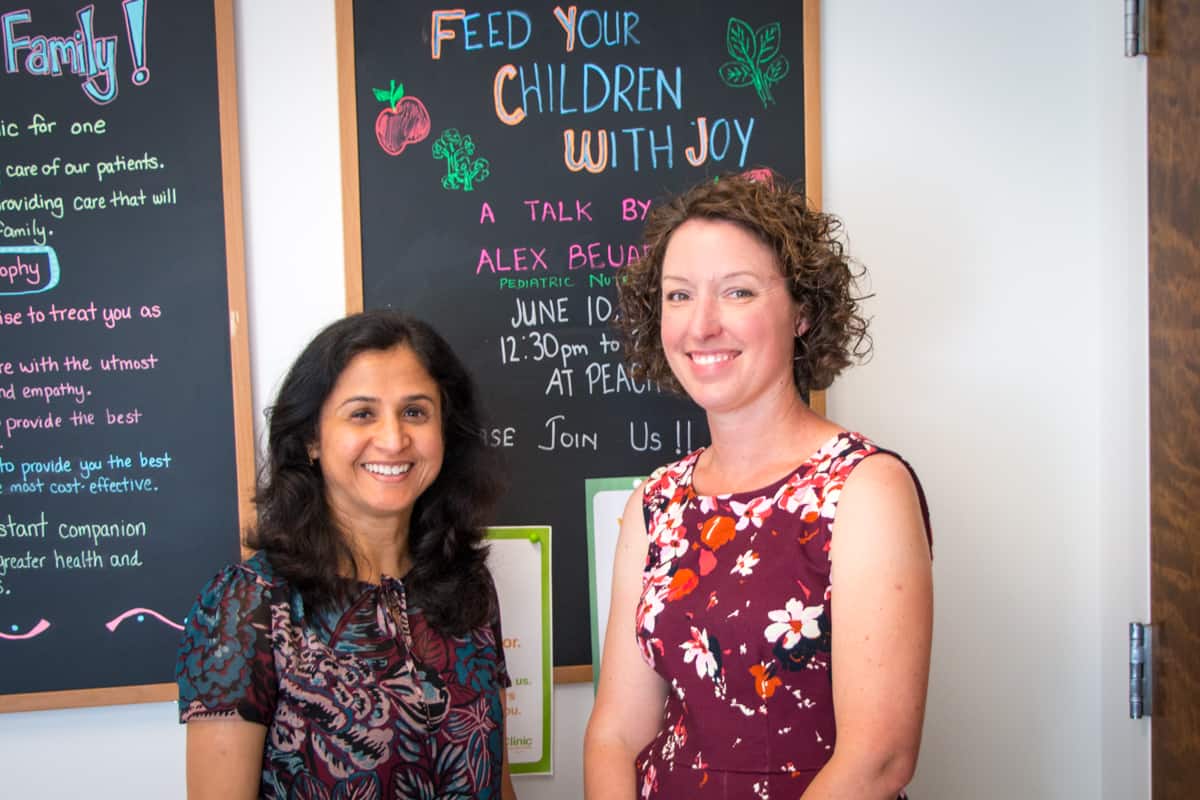
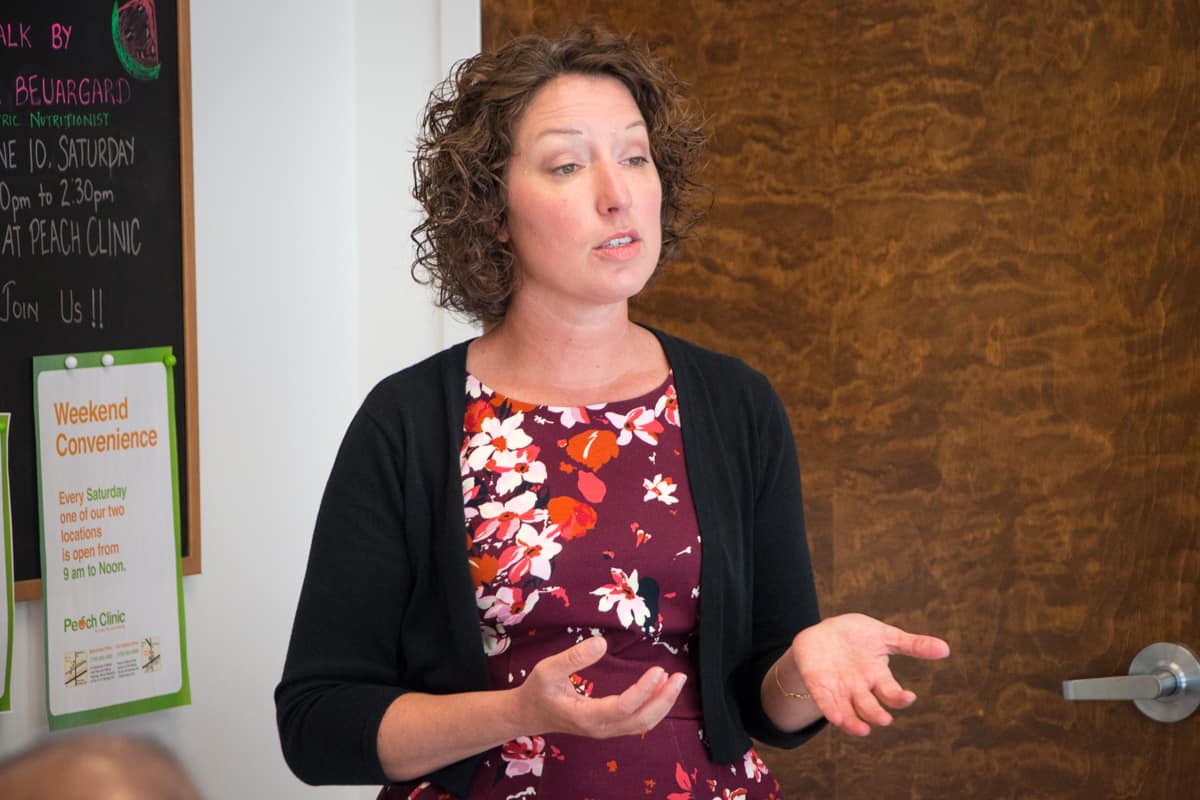
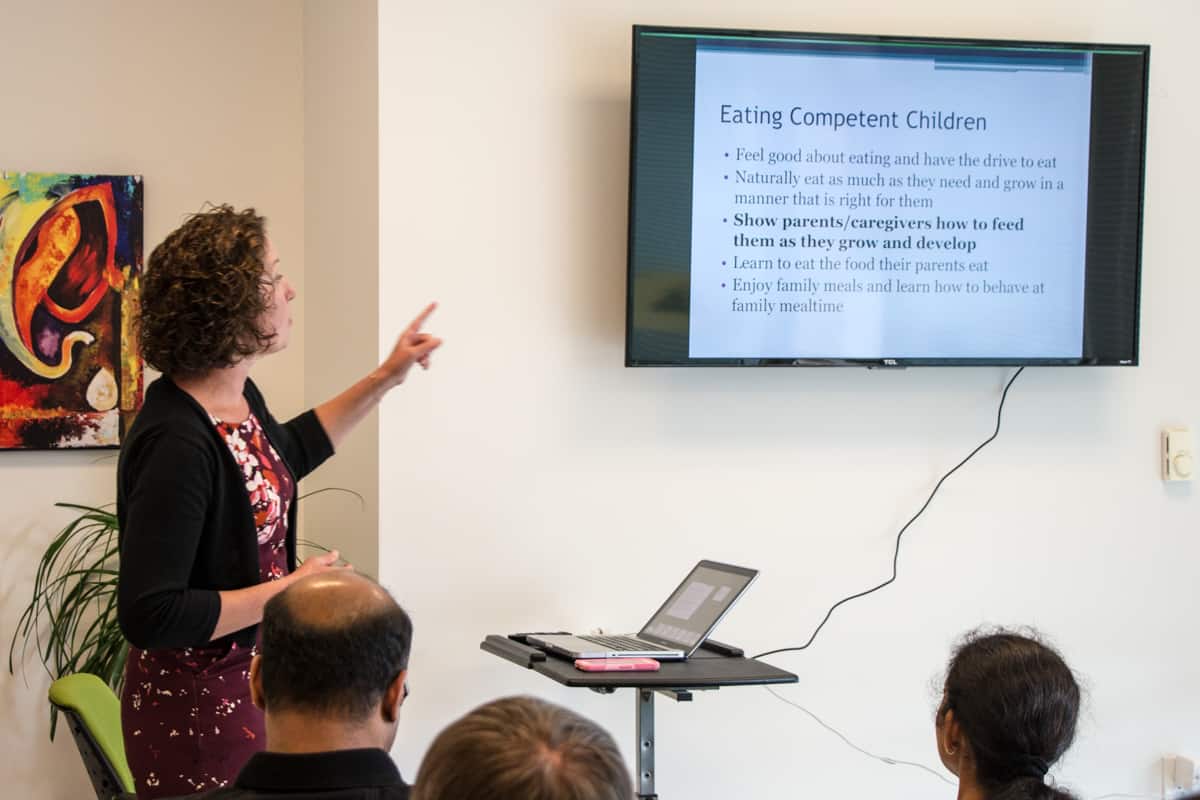
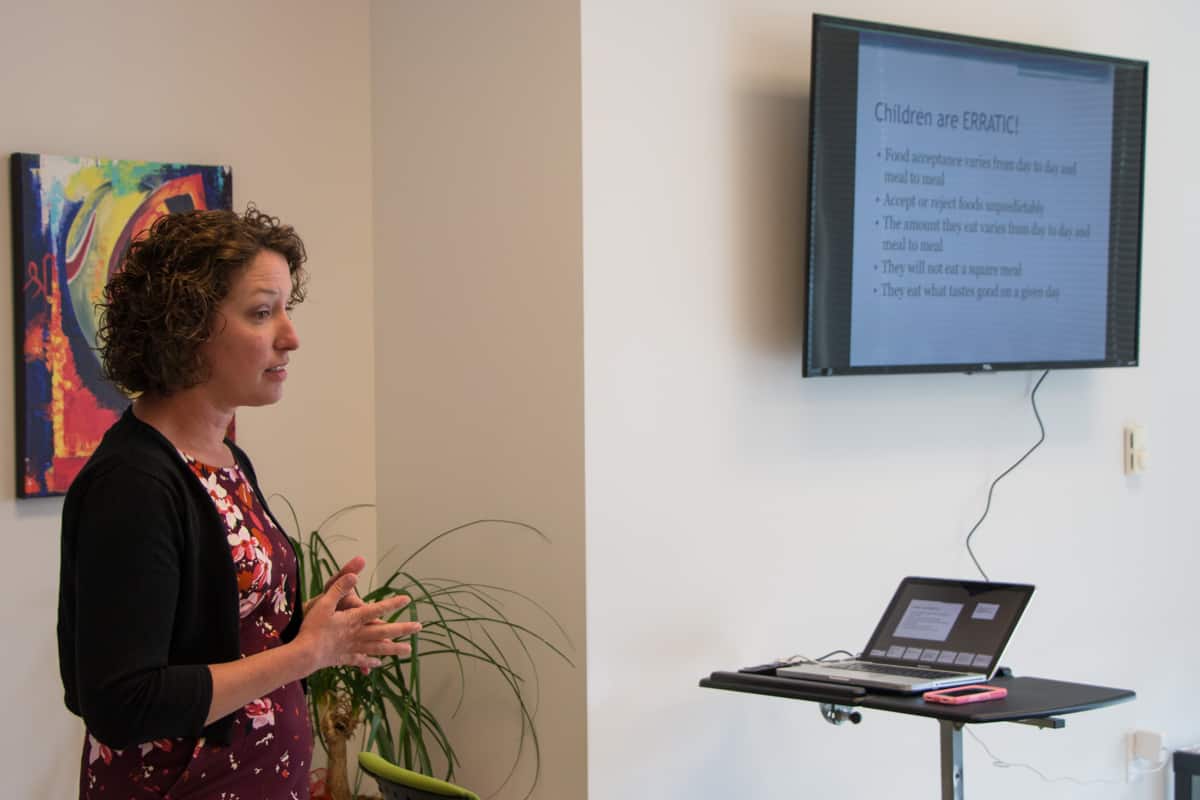
A talk by Pediatric Nutritionist Alexia Beauregard at Peach Clinic
Pediatric nutritionist Alexia Beauregard delivered a wonderful talk about childhood nutrition, challenges in feeding children and practical solutions to everyday feeding problems. Visit her page seagrassnutrition.com for more information and contact details.


Washing away the nasal allergies.
We are in the peak of pollen season and pollen is troubling many people with nasal allergies. In North Atlanta, Oak, Hickory and Birch trees are the main source of pollen in past one week.

The pollen or allergen that we inhale, settle in our nasal passages. Our body starts recognizing them as foreign particles and starts making antibodies against them. This reaction leads to swollen nasal passages and also leads to mucus formation in the nose. Usually, it is a clear watery discharge to begin with and then it turns in to thick white mucus. Some of the major symptoms of nasal allergies are:
- Sneezing
- Runny nose
- Nasal congestion
- Itchy and red eyes
Treating nasal allergies can be challenging. There are many different medications available to treat nasal allergies. However, it can be confusing to choose an appropriate over the counter allergy medication that can alleviate symptoms.
A simple and inexpensive approach to treat allergies is to do saline irrigation of nose and sinuses. The basic principle is washing away those allergens and cleaning nasal passages so that the whole cascade of events that follows after we inhale allergens is avoided.
Daily use of saline rinses not only washes out all the allergens but it also decreases the swelling of the nose and removes the thick mucus from nasal passages and sinuses. The irrigation bottle as shows in the picture is easy to use and even a child as old as 5 years can do it. Saline that is used for nasal washes is easy to make at home. Take 2 cups of water, add 1 teaspoon of salt and boil them. Let it cool to room temperature and you are ready to rinse your sinuses!!

Allergies are difficult to treat but getting rid of an allergen is as simple as washing it away with saline!
Monal Shah, MD
Dr. Dhaval Shah gives health education lecture on arthritis at BAPS Swaminarayan temple
Congratulation to Dr Dhaval Shah for delivering excellent presentation on arthritis at BAPS Swaminarayan temple.


Dr. Dhaval Shah designated Civil Surgeon by USCIS

Dr. Dhaval Shah has been designated Civil Surgeon by U.S. Citizenship and Immigration Services (USCIS).
A Civil Surgeon is a physician, designated by the USCIS to conduct medical examinations of people who are applying for an adjustment of status to permanent residence, or others who are required by the USCIS to have a medical examination.
This means that Peach Clinic is now offering Immigration Physicals at the both locations that you use for all your healthcare needs.
Enterovirus D68 : What you need to know.

New kind of respiratory illness is getting lot of attention on television and other media. We have been getting lots of questions about this new virus from worried patients and parents. Here is what you need to know about this new bug.
- First of all, there is nothing new about Enteroviruses. They are one of the most common causes of respiratory infections. The twist to the story is this: a type of Enterovirus called D68, previously thought to be causing mild cold like symptoms only, suddenly seems to be causing much more severe infections since last month.
- The outbreak was first reported in Kansas City and Chicago. Now the cases are being reported from other states.
- Young children seem to prime target for this virus. They start with cough and cold like symptoms but rather than getting better, they can quickly become very sick.
- Diagnosis is made by typing of Enterovirus, a specialized test that takes several days and is done only by certain labs.
- There is no specific treatment of vaccine for this virus.
- What can you do?
- Seek medical attention if you have respiratory symptoms (cough, congestion, breathing problems.)
- Make sure you take precautions for cutting down the spreading of virus:
- Wash hands often with soap
- Avoid touching face
- Avoid kissing, hugging and sharing cups
- Disinfect the frequently touched surfaces
Dr. Amita Ghia designated Civil Surgeon by USCIS
Congratulations to Dr. Amita Ghia for being designated Civil Surgeon by U.S. Citizenship and Immigration Services (USCIS).
A Civil Surgeon is a physician, designated by the USCIS to conduct medical examinations of people who are applying for an adjustment of status to permanent residence, or who are required by the USCIS to have a medical examination.
This means that Peach Clinic is now offering Immigration Physicals at the same convenient location that you use for all your healthcare needs.

Want to live longer? Eat more fruits and vegetables.
Your mother knew this all along. But we did not have strong studies to prove it. A recent study seems to have settled this once and for all: eating fruits and vegetables helps you live longer.
A large meta-analysis (a study that puts together all the previous studies and compares the results) showed that eating fruits and vegetables makes you live longer. It also became apparent that more fruits and vegetables you eat, more benefits you get. In other words, eating two servings of fruits and vegetables is better than one, eating three servings is better than two, and so on. Before you replace your whole meal with fruits and vegetables, let me tell you that maximum benefit was at about five services a day. After that there was not much more benefit.
So bottom line is this: eat up to five servings a day of fruits and vegetables and live longer.
In case you are wondering, “what is one serving?” click here to go to CookingLight for great information.
Who knew living longer is this simple, not to mention delicious!
Photo by epSos.de
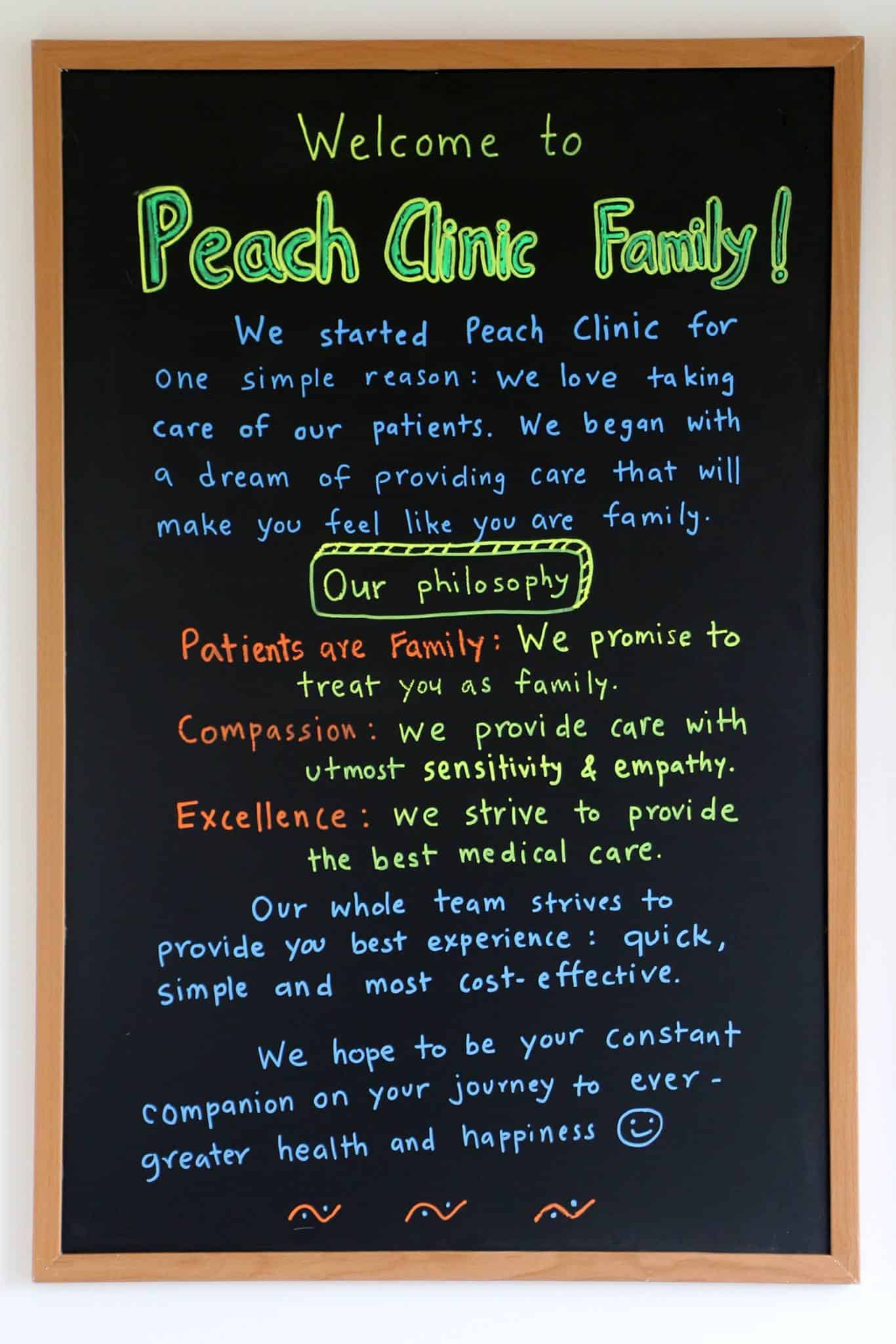
Our patient care philosophy.
Our care philosophy is very simple : we treat you as if you are our family ! This sign at our door greets our visitors and reminds us of our mission.
Recent Comments